
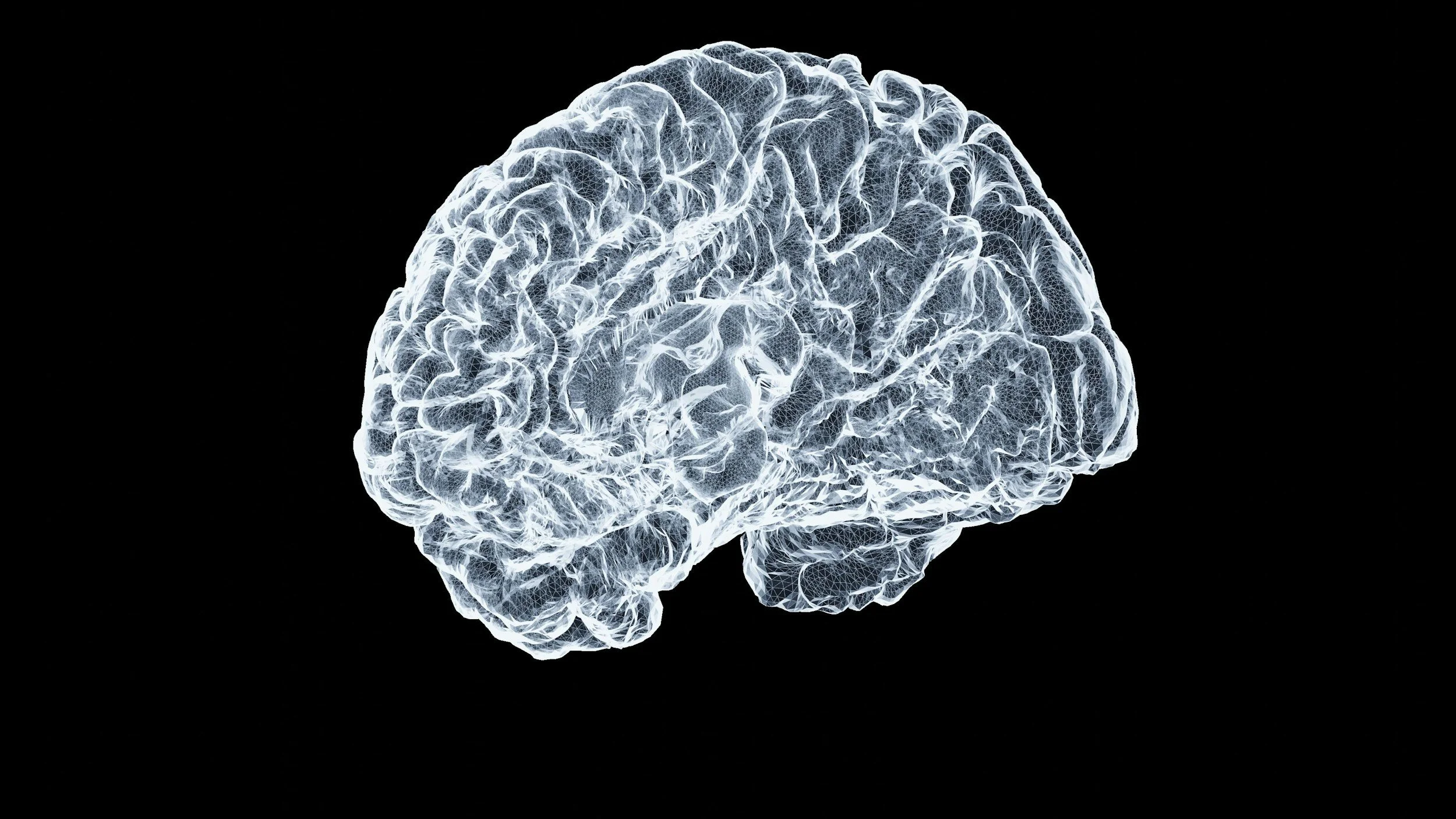
Deep Brain Reorienting (DBR)
Deep Brain Reorienting (DBR) is a therapy developed by psychiatrist Dr Frank Corrigan, grounded in the neurophysiology of the brainstem and the reflexive, split-second moments that occur at the start of a traumatic experience.
Rather than working with the story or the emotions attached to a memory, DBR works with something earlier and more primal: the brainstem's initial, subconscious reaction, the reaction that happens before we're even aware something has happened.
How do you work with something that's subconscious, happens in milliseconds, and floods the whole system?
To make sense of this, it helps to picture the brain as a building.
The Brainstem — "The Control Room"
Deep at the base of the brain, where the spinal column meets the skull, sits the brainstem. Think of it as the control room in the basement of the building, the part that runs everything automatically, below conscious awareness: heart rate, breathing, blood pressure, swallowing, arousal levels, sleep-wake cycles.
This is the brain's trigger system. The instant it registers danger such as a loud noise, a raised voice, even a fragment of memory that echoes past danger, it fires a surge of noradrenaline, acting before we consciously know what's happening. This is often the root of feeling "always on alert" or having a body that's "locked into a brace." Once triggered, the brainstem changes everything upstream by amplifying emotion and meaning, while dampening the prefrontal cortex's ability to think clearly and manage the situation.
The Limbic System — "The Alarm and PA System"
Made up of the interconnected midbrain, brainstem, and thalamus, the limbic system sits in the middle of the building, broadcasting the alarm blaring it throughout every floor. Once it sounds, it overrides the executive floor upstairs.
The Prefrontal Cortex — "The Executive Floor"
At the top of the building is where careful, considered decisions are usually made. But once the alarm goes off, power is redirected to the limbic alarm system and the lights on the executive floor dim, reasoning slows, and the phone stops working right when a threat response takes hold.
Where DBR Works
DBR focuses on the control room, that is the brainstem, and specifically on the moment it detects a sudden mismatch between what was expected (environmentally or relationally) and what actually happened. That mismatch registers as emotional shock.
This shock can be so powerful it can throw the whole system off balance, creating confusion and disorientation. People often describe shock responses as:
Bracing or tightening in the shoulders
A pulling sensation behind the eyes
Electrical surges up and down the spine
A hollowing or dropping feeling in the stomach
Waves of cold or heat
Pressure or stabbing pain in the head
Many of us recognise these moments. In DBR, slowing down and carefully tracking the shock response by allowing these sensations to be felt and expressed while attuned to another person allows the brainstem to finally process the shock, rather than continuing to re-experience the past over and over again.
Why This Matters for Early Trauma
Early attachment and relational trauma often has its roots in exactly this kind of shock and emotional pain. By attuning to these primitive, pre-verbal experiences, DBR promotes regulation at the nervous system level.
Once the shock itself has cleared, the deeper emotional pain beneath it such as aloneness, rejection, abandonment, betrayal, injustice, humiliation, can finally be acknowledged and processed. These deep, far reaching core experiences are often difficult to reach with just talking and thinking alone.
DBR published papers: